Depth Psychotherapy
The self beneath the surface

Therapy
Sometimes what troubles us is not simply what is happening in our lives, but something deeper; patterns we keep repeating, feelings we cannot quite name, relationships that seem strangely familiar, or a sense that some part of ourselves remains out of reach.
Psychotherapy can be a way of turning towards these less conscious parts of ourselves rather than simply trying to silence the symptoms they produce. Together, we will explore the stories, patterns, conflicts and meanings that lie beneath the surface of your experience. We might follow a memory, a fantasy, a recurring image, a dream, a relationship, or even something that seems insignificant. These become clues to the inner world, revealing something of what has been hidden, defended against or left unfinished.
This way of working can be particularly meaningful for people who are naturally imaginative, creative or drawn to ideas, images and symbolism. If you experience the world intuitively, think in metaphors, or find that creative work often expresses something you cannot easily put into words, these ways of knowing may become an important part of the therapeutic process.
Rather than looking only at what is wrong, we can become curious about what our difficulties may be trying to express. Sometimes the psyche speaks indirectly, through dreams, symbols, repetition, unexpected feelings and the stories we tell ourselves. By paying attention to these threads, we begin to recognise the deeper patterns and assumptions that have shaped our experience, including beliefs about ourselves and the world that may once have helped us make sense of life. Exploring these patterns can open up a different way of understanding who we are and where we have come from.
Through this process, what once felt confusing, fragmented or impossible to change may begin to take on meaning. And with greater awareness can come a different kind of freedom, to feel more whole, to relate more deeply, and to live with greater possibility.
Couples Therapy
I offer psychodynamic couples therapy in Peckham and Camberwell, South East London, working with couples experiencing recurring conflict, emotional distance, communication difficulties and patterns in their relationship that may feel difficult to change.
Relationships can bring us into contact with parts of ourselves that might otherwise remain hidden. What draws us towards another person may also bring us face to face with difference; different ways of seeing, feeling, wanting and making sense of the world. At times, what is most difficult between two people is not simply a failure to communicate, but the tension between two inner worlds that cannot easily be reconciled.
In couples therapy, we can become curious about what is happening not only between you, but within the relationship itself. The patterns that emerge between two people begin to take on a life of their own: familiar arguments, recurring misunderstandings, moments of distance or intense closeness, and reactions that can seem disproportionate to what is actually taking place. These patterns reveal something about the inner worlds each person brings to the relationship, as well as something about the relationship being created between you.
Rather than focusing only on who is right, or on how one person might change, we can explore what each of you encounters in the other. We might look at the expectations, projections and assumptions that shape how you see your partner and consider what becomes possible when these are brought into awareness. Learning to witness and relate to differences, rather than simply trying to overcome them, can open up a deeper way of knowing both the other person and ourselves.
As these patterns become more conscious, the relationship itself begins to transform. What once felt frustrating, threatening or incomprehensible may begin to make a different kind of sense. In this way, greater understanding can create space for a deeper and more intimate way of relating.
Credentials
I am a fully qualified psychotherapist holding a masters degree in psychodynamic psychotherapy from The University of London. I have also undertaken training in couples therapy at the world-renowned Tavistock Institute and hold a specialist certification in this field, accredited by COSRT. I am a registered member of the BACP, meaning that I am part of an accredited body and adhere to their ethical codes of conduct and commitments to good practice.
Format
I offer both open-ended and time-limited treatment. This can be discussed and agreed upon during the initial consultation or at any point during treatment. Sessions last 50 minutes and take place once or twice weekly.
I charge £100 for individual sessions, £130 for couples, and will invoice at the end of every month. You may be unsure as to what kind of therapist or therapy you will feel most comfortable with and so to help with this I only charge for the initial meeting if we agree to work together.
Location
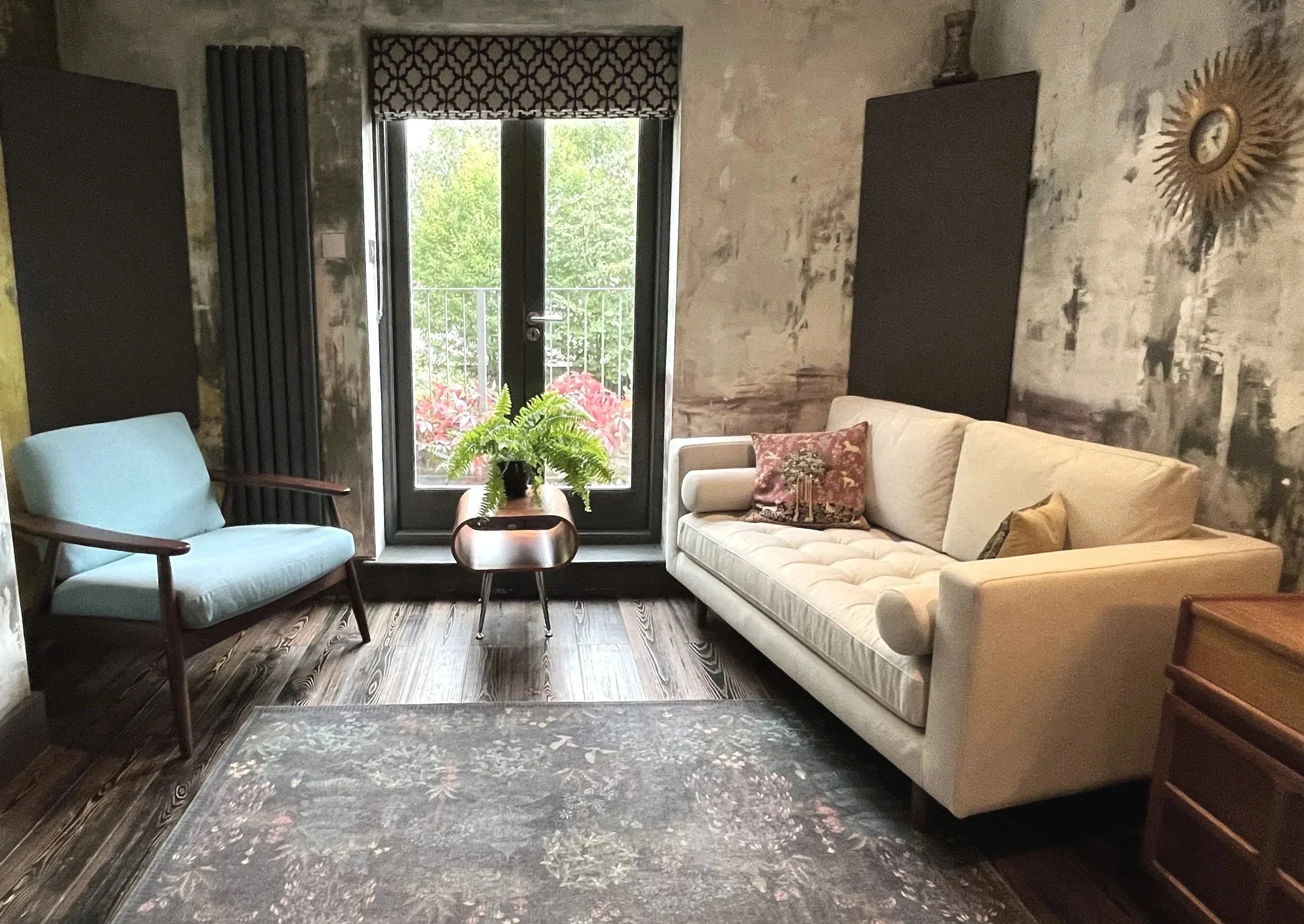
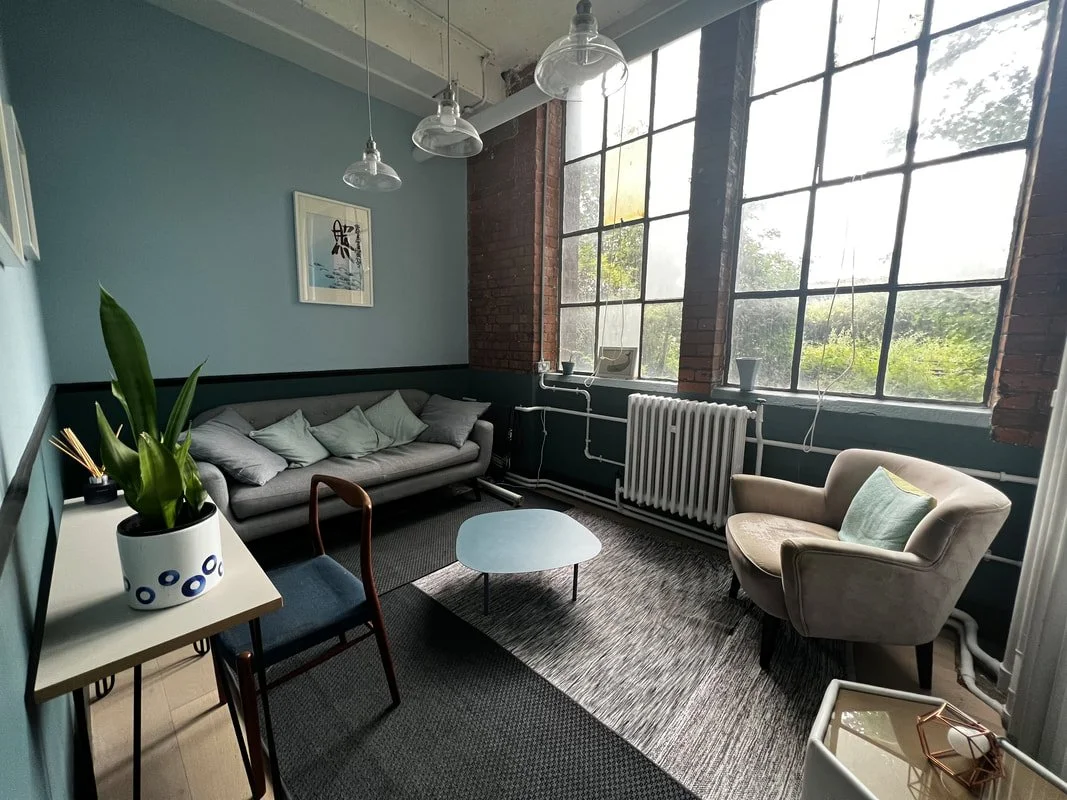
I work both online and face to face, from a quiet location on a leafy road in Camberwell, South London, with good transport links and free on street parking (except between 11am and 1pm). I also practice at The Couch which is in the Bussey Building in Peckham.
Frequently Asked Questions
-
The first session is an opportunity to begin to understand what has brought you to therapy and what you are hoping might change. We will explore what is happening now, as well as some of the circumstances and relationships that may have shaped the situation.
There is no expectation that you arrive knowing exactly what is wrong or what you need. Part of the work is discovering this together. It is also a chance for you to get a sense of what it is like to work with me and whether you feel comfortable.
-
There is no fixed answer. Some people come with a particular difficulty and find that a relatively focused period of therapy is helpful. Others want to explore deeper or more longstanding patterns and choose to work over a longer period.
The length of therapy depends on what brings you, what you want from the work and what we discover together. We can review this as the therapy develops rather than deciding everything at the beginning.
-
People come to therapy for many different reasons. You may be experiencing anxiety, low mood, difficulties in relationships, a sense of being stuck, loss, questions about identity or purpose, or a feeling that something in your life is not quite right.
Sometimes there is a clear problem; at other times it can be harder to put into words. Relationships can also become difficult when we find ourselves caught in patterns that seem to repeat, despite our best intentions.
Therapy can provide a space to explore both what is happening on the surface and some of the deeper patterns that may be influencing how we think, feel and relate.
-
No. You do not need to arrive with a clear explanation of what is wrong, or even know exactly why you are seeking therapy.
Sometimes the most important part of beginning therapy is finding the words for something that has previously been difficult to understand or express. There may also be different perspectives on what is happening, particularly when relationships are involved.
We will start wherever you are and work from there.
-
Sessions are £100 for individual therapy and £130 for couples therapy. I will invoice at the end of every month.
I only charge for the initial session if we agree to continue working together.
Sessions are usually 50 minutes and we can discuss the practical arrangements when you make contact.
-
I generally work with people on a weekly basis. Regular sessions are an important part of creating continuity and allowing the work to develop over time.
Therapy is not only about what happens within an individual session. Having a consistent space each week helps us build a relationship, reflect on what is emerging and develop a deeper understanding of the patterns that may be bringing you to therapy.
-
What you discuss in therapy is treated as confidential, and I take your privacy very seriously.
There are some professional and legal limits to confidentiality, particularly where there is a serious concern about someone's safety. I would normally discuss any such concern with you wherever possible.
We can talk about confidentiality and any questions you have at the beginning of our work.
-
It may, if this is relevant to making sense of what is happening now. Our earlier experiences, particularly our relationships with those around us as we developed, can influence the ways we understand ourselves and other people.
This can sometimes help us see why particular situations or relationships carry such intensity, or why certain reactions can feel stronger than we expect.
This does not mean that therapy is simply about looking backwards. The purpose is to explore how earlier experiences may still be present in the ways we think, feel and relate today.
-
Yes. I offer therapy both in person and online, depending on your circumstances and what is most appropriate for the work.
We can discuss the different options when you make contact.
-
The simplest way is to get in touch using one of the “Enquire” buttons on this website to send an email. You can tell me a little about what has brought you to therapy and what you are looking for. I will respond to arrange an initial session.
You may be unsure as to what kind of therapist or therapy you will feel most comfortable with and so to help with this I only charge for the first meeting if we agree to work together.
Men Connect Groups
Men Connect grew out of many years of running informal drop-in groups for men across South East London. Men came and went, conversations started, stalled, wandered and sometimes became unexpectedly meaningful. Over time, it became clear that when familiar roles could be left at the door, something different could happen. Without the need to be the strong one, the fixer, the critic or the rescuer, there was more room to think about what was actually going on underneath.
Much is being said about men and masculinity. Often it’s framed as a problem to be solved, something broken or dangerous that needs correcting. But another way of understanding this moment is quieter, and perhaps more generous: masculinity finding itself again, confronted with new freedoms, new expectations, and the uncertainty that comes with both.
Our sessions bring the depth of psychodynamic group work into an accessible setting. They offers a space to talk, listen and reflect without needing to arrive with a particular problem or solution. The intention is not to tell men how to be, but to create space to explore how we are with ourselves and with others.
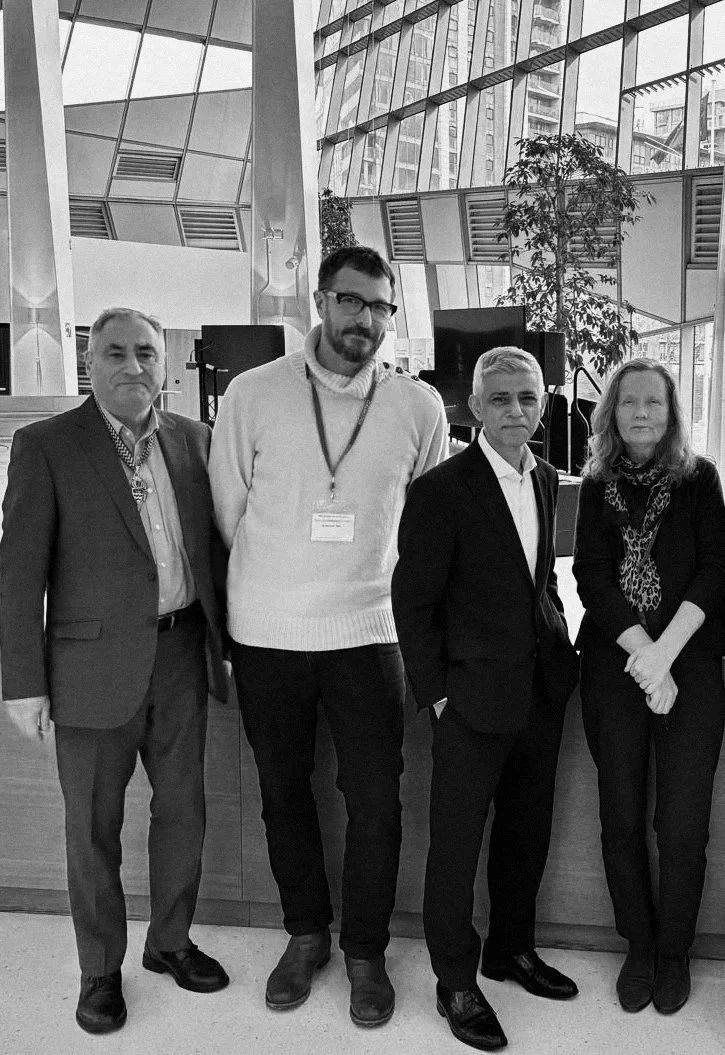
Men Connect was recently recognised at London City Hall during Mayor’s Question Time, where Lord Duvall, Chair of the London Assembly, cited the initiative as an example of impactful work supporting men’s mental health.
Ahead of this, I met with Lord Duvall to discuss my research and experience working with men’s groups, and with Mayor Sadiq Khan to discuss some of the wider cultural and systemic factors contributing to the men’s mental health crisis, including the disproportionately high rate of suicide among men.
This recognition reflects a growing awareness of the importance of spaces that foster open conversation, meaningful connection, and positive mental wellbeing for men across our communities.